MIDEM Classical Awards
2009
The International Music and Discography Market (MIDEM) has been held annually in Cannes, France, for more than 40 years. This is the meeting place for all professionals in the field, who come together to share their good moves and become familiar with new trends.
MIDEM Classical Awards is one of the most significant musical events that take place during MIDEM. In 2005 it replaced Cannes Classical Awards, and since then has become an exceptional launch pad for all the winning artists. MIDEM Classical Awards sets a mission to discover creativity, innovation of repertoire and artistic excellency for CDs and DVDs of classical music. For this occasion, a prestigious international jury made up of the leading music professionals from different types of mass media come together to recognise the top artists and recordings of the year.
midemclassicalawards.com was the official site for the MIDEM Classical Awards.
Content is from the site's 2009 - 2010 archived pages and other outside sources.
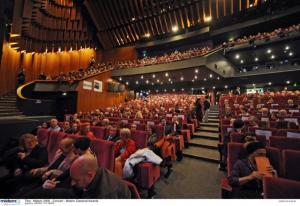
People drive music forward. And MIDEM is about people, the worldwide community of professionals from every sector, who create and use music in all its forms.
MIDEM offers maximum return on investment
- Business - The whole chain is here! Make deals with your regular partners, as well as finding new opportunities with both your direct related and associated business.
- Networking - Attend four days of special events and network with new business partners. Get access to the key music industry players - with MIDEMWorld available throughout the year.
- Visibility - Give your business international exposure - Be visible among the whole world’s music community thanks to international media coverage.
- Knowledge - With a range of conferences and high level meetings, it' s an opportunity to learn from the most talked about senior executives and industry specialists.
About MIDEM Classical Awards
Founded in 2005 as the successor of the Cannes Classical Awards, the MIDEM Classical Awards 2010 recognize creativity, innovation of repertoire and artistic excellency for CDs and DVDs of classical music.
For this occasion, a prestigious international Jury made up of the leading specialist magazines, radios and organisations, has come together to recognise the top artists and recordings of the year.
The strong presence of professionals from the classical sector during MIDEM, combined with the wish of Jury members to encourage the distribution and promotion of the Award winners, make the MIDEM Classical Awards an exceptional launch pad for all the winning artists.
The general categories are:
- CD: Early Music: Music of any genre composed before 1600
- CD: Baroque Music: Any genre between 1600 - 1750
- CD: Vocal Recitals: Music for 1 – 4 voices with orchestra, Lied, melody, opera
- CD: Choral Works: Music for more than 4 voices with or without instrumental music
- CD: Opera: Including also operetta and zarzuela
- CD: Solo Instrument: From any period for 1 instrument
- CD: Chamber Music: Music from 2 – 10 instruments
- CD: Concertos: Work for 1 or more soloists with an ensemble CD: Symphonic Works: Any work with more than 10 players – without soloist
- CD: Contemporary Music: Music not older than 25 years or from a living composer
- CD: First Recording: First recording of a musical work
- CD: Historical: First commercial CD release of a recording older than 25 years
- DVD: Opera / Ballet
- DVD: Concerts
- DVD: Documentaries
The special categories are:
- Lifetime Achievement Award Classical Download
- Artist of the Year
- Label of the Year
- Recording of the Year
- Outstanding Young Artist, (IAMA Award)
- Jury Nomination Award
- Classical Download Award
- Special Chopin Award (only 2010)
In The Show: As the media reviewer for ShowBlitz I covered this event with live camera feeds and a recorded version consisting of taped sections pulled from the feeds for US viewers. Unfortunately, there was a well publicized scandal involving a couple of the jurors arrested for being drunk and disorderly, something they deny happened and there are no police reports to support the claim. Yet this story hit the rumor mills and spread like wildfire. It was not welcome news for us. But to see that story at the top of the search for MIDEM awards in Google was stunning and disheartening. Google was helping to smear our name by associating us with a tabloid story that turned out not to be true. Apparently this is a well known problem w/ Google. Our PR guys started talking about getting an seo guru to manipulate the search results to get rid of the problem. We could not afford it and ended up living with it - not sure it mattered in the long run. The show was regal and delightful and many had a wonderful evening enjoying the talen. But everyone is annoyed to say the least, with Google.
Midem Classical Awards: and the winners are ...
BY MARC ZISMAN | qobuz.com | JANUARY 21, 2009
Philippe Jaroussky, Christoph Prégardien, Julia Fischer, Adam Walker and Murray Perahia are among the winners of the 2009 Midem Classical Awards .
French countertenor Philippe Jaroussky and German tenor Christoph Prégardien are among the winners of the 2009 Midem Classical Awards , announced at Cannes on the occasion of the 43rd edition of the Midem (International Discography and Music Publishing Market) on 20 January.
Jaroussky was awarded the title of "Best Baroque Recording" and "Lyric Artist of the Year". Prégardien is distinguished in the categories "singing recital" and "best recording of the year".
A vibrant tribute was paid to the famous Italian tenor Carlo Bergonzi , world renowned for his phenomenal career (alongside Maria Callas and Herbert von Karajan) and especially for his interpretations of the Verdian repertoire. During this ceremony, he received from the hands of the young German tenor Jonas Kaufmann, who came for the occasion, a special Midem Award for his entire career. Some archive footage of a representation of the Masked Ballhe had given in Tokyo in 1967 allowed the audience of the Palais des Festivals to hear Bergonzi again sing one of his favorite tunes Ma for me perderti and to reserve him a moving ovation standing. On the program of this evening of Midem Classical Awards 2009 , the captivating timbre of Jaroussky , in Porpora's famous Alto Giove , but also the great Finnish cellist Anssi Karttunen in an interpretation of Etincelles de Saariaho. French pianist Lise de la Salle offered her reading of the finale of Mozart's "Jeune Homme" Concerto while Prégardien proposed that of Haydn's opera aria d' Anima del Filosofo .
Sabine Meyer, German clarinetist, made the audience a surprise for her performance by playing the Andante of the Clarinet Concertoof Mozart and finally, the Sony Masterworks label, named "Label of the Year", was represented by American guitarist Sharon Isbin.
This evening will have also discovered one of the hidden talents of Lise de la Salle who presented the evening alongside James Jolly at the Debussy auditorium of the Palais des Festivals.
On their side, British flautist Adam Walker was crowned "revelation" and German violinist Julia Fischer"instrumental soloist of the year".
The international jury of this 5th edition of the Midem Classical Awards , composed of journalists and professionals, distinguished a total of 36 disks and 9 DVDs.
The 2009 winners are as follows:
• Early Music: Monteverdi - Fifth Book of Madrigals , Ensemble La Venexiana (Glossa).
• Baroque music: Carestini - History of a castrato , Jaroussky (Virgin / EMI).
• Recital of singing: Schubert - The beautiful miller , Christoph Prégardien (Challenge Records).
• Choral Music: Handel - The Messiah , The Sixteen, Harry Christophers (Coro).
• Solo instrument: Bach - Partitas 2, 3 and 4 , Murray Perahia (Sony).
• Chamber Music: Janacek and Haas - String Quartets , Pavel Haas Quartet (Supraphon).
• Opera: Janacek - Mr. Broucek's Travels , JiÅ™í BÄ›lohlávek (DG / Universal).
• Contemporary Music: Saariaho - On Light Notes, Orion, Mirage , Christoph Eschenbach (Ondine).
• Historical Music: Fritz Busch - Complete recording of Dresden (1923-1932) , Busch (Profile).
• Concertos: Bach - Organ Concertos op. 4 , Richard Egarr (Harmonia Mundi).
• Symphonic Music: Mozart - Symphonies 38 to 41 , Sir Alan Charles Mackerras (Linn).
• First recording: Wellesz - String Quartets No. 3, 4, 6 , Vienna Artis Quartet (Nimbus).
• DVD (opera / ballet): Adams - Doctor Atomic , directed Peter ellars (Opus Arte).
• DVD (concerts): Mahler - Symphony No. 3 , Claudio Abbado (EuroArts).
• DVDs (documentaries): Karajan - Maestro For The Screen (Arthaus).
• Lyric artist of the year: Philippe Jaroussky (counter-tenor).
• Instrumental Soloist of the Year: Julia Fischer (violin).
• Special prize for his entire career: Carlo Bergonzi (tenor).
• Label of the year: Sony Masterworks.
• Revelation of the year: Adam Walker (flute).
• Jury Prize: Beethoven - Sonatas for violin, vol. 5 , Michael Korstick (Oehms).
The Jury of the MIDEM Classical Awards

President of the MCA Jury Rémy Franck (Pizzicato)
All entries that meet the conditions of participation will be reviewed by Reed MIDEM and then submitted to an international Jury.
The international Jury is composed of 15-20 members. The core of the Jury is the so called MCA Jury Board which is elected by jury members and consists of five of the members. The Jury members have been selected by Reed MIDEM.
The Jury members IMZ and IAMA will participate at the voting of the special categories. For the general CDs and/or DVDs categories, IAMA will participate only in the final round. IMZ will participate for the DVD categories from the beginning, for the CD categories only in the final round.
The following pre-selection and final selection processes will apply depending on category being judged.
The Jury will base their decisions upon criteria able to define creativity, without limitation, such as:
- Innovation of repertoire
- Artistic excellency
- Packaging
- Technology
If there is any imbalance between the number of CDs and/or DVDs competing in a particular category, or for any other reason identified by the Jury, the Jury reserves the right not to nominate a winner for each category.
The pre-selection and selection Jury’s decisions are final and without appeal. By entering the competition, the submitting entrants agree not to challenge the pre-selection and/or selection Jury’s decisions on any ground.
The process of voting for MIDEM Classical Awards
- The Jury will be judging the entries by taking into account the above mentioned criteria.
- There will be three rounds of voting, one corresponding to the pre-selection of a maximum of 10 CDs and/or DVDs in each category, the second one corresponding to the selection of a short list of 5 CDs and/or DVDs in each category and a third and last one corresponding to the final selection of 3 nominations and 1 winner in each category.
- For each round, each Jury member will rate each CD or DVD and score it on a Judging Form, approved by Reed MIDEM:
- In the first two rounds, the Jury members nominate 10 respectively 5 CD/DVD productions without giving points. In the third round a CD or DVD can earn between 1-5 points (5 being the maximum rate) taking into account the criteria as mentioned above.
- Pre-selection: at the end of the first round, Reed MIDEM will collect and tabulate all judging forms for the respective categories. The 10 most nominated CDs and/or DVDs will reach the second round.
- Selection: at the end of the second round, Reed MIDEM will proceed as for round 1, it is specified that only the 5 most nominated CDs and/or DVDs will reach the final round. In this final round, the 3 CDs and/or DVDs with the maximum total points will be the nominations whereas the CD and/or DVD with the maximum points will be the winner of the category (hereafter the “winner” or collectively “winners”).
The companies whose CD and/or DVD titles are selected by the MIDEM Classical Awards 2010 International Jury will be notified of their award by Reed MIDEM, by mail during the course of December 2009 and invited to participate at the Awards Ceremony which will take place in Cannes, on
Tuesday, 26th January 2010.
Please note that accommodation, flights and expenses on site are to be paid for by the winners. Winning one of the MIDEM Classical Awards does not give complementary entry to the MIDEM exhibition area. However, winning artists will be granted accommodation (stay of 1 night for one person only, extras excluded) and a complementary entry to the MIDEM exhibition area.
The winners may be asked to supply additional information about their company and/or artists such as photographs, logo, company profile, etc for promotional purposes. It being recalled that MIDEM is a communication and promotion forum for the music industry, the entrant hereby authorizes the MIDEM and their representatives and guarantees that it has been authorized to that end by right holders, to directly or indirectly record the MIDEM Classical Awards 2010, and to reproduce and communicate the same
to the public by any means, and on all media for the purposes of communicating on the MIDEM Classical Awards 2010, especially on the www.midem.com website. The entrant accordingly authorizes MIDEM to use his/her name and likeness and if so, that of its representative present during the MIDEM Classical Awards. To the same end, the entrant also guarantees that MIDEM is authorized to freely use any of the logos, trademarks, title, extracts and other intangible rights and promotional items related to the CDs and/or DVDs. Shall be also made broadcasts of excerpts of the CDs and/or DVDs lasting less than three minutes during regional or national radio programs, or on the website.
Lise de la Salle presenting MCA 2009
The Ceremony of the 5th Midem Classical Awards will take place on January 20th 2009 at 8pm in the Theatre Debussy and will be hosted by the famous French pianist Lise de la Salle and the James Jolly from Gramophone, UK.

Born in Cherbourg, France in 1988, Ms. de la Salle was surrounded by music from her earliest childhood. She began studying the piano at the age of four and gave her first concert at nine in a live broadcast on Radio France. At 13, she made her concerto debut with Beethoven's Piano Concerto No. 2 in Avignon. After an impressive series of first prizes Lise de la Salle was awarded the Young Concert Artist International Auditions in New York 2004, which gave her the opportunity to debut in New York and Washington. She performed in Japan and on several festivals in Europe. Her recording of works by Bach and Liszt was selcted as The Gramophone's recording of the Month in August 2005. The first recording with works by Ravel and Rachmaninov also received critical acclaim. Further, Lise de la Salle recorded the piano concerts No 1 by Shostakovich, Liszt and Prokofiew. The recording was awarded CD of the Month and Editor's Choice in the Gramophone April 2008 edition. Her most recend disc, with works by Mozart and Prokofiev, also was selected Gramophone's Editor's Choice, August 2007 and BBC Music Magazine Choice.
Gazing the future of the record industry
by Kornél Zipernovszky / Feb 10 2009
There was much talk about the general fallback of the recording industry, and last year recession has hit the whole of the world economy. There was not really too much optimism preceding the biggest international fair of the industry, Midem, although the whole of the sector experienced tendencies dating back much earlier than 2008.
This year professionals were not asking questions about the most effective means of fighting piracy, but rather, how to best utilise the new channels of digital music distribution, including downloading on the internet.
Midem participants were running around with bags sporting the logo of Napster while Midemnet emancipated as a fair on its own. Often the figure was quoted that the new service of Nokia in some countries includes five thousand song titles, and similar services are being worked out by Sony Ericsson and Orange, and iPhone would loose its capital P and would become a common noun, it was predicted.
There were still some examples of what major record companies excelled in getting wrong over the years: the life achievement award and a national award from France was given to the British bard, Donovan, who certainly deserves respect from everywhere, however his heyday lays back many-many generations. Charles Aznavour is still chique, no word about that, however there is some discrepancy between his being loudly celebrated at the Midem and the 21st century goals the industry thrives to achieve. I was not too optimistic about the prospects of the Russian pop stars, who were featured at the opening party to conquer the European market, either, because some of them were not even trying to be original.
I gathered a much favourable impression at both jazz concert series of the Midem. One presente established performing artists and the other introduced up and coming talents. The non-professional part of the audience in the club of the Majestic as well as professionals were happy to experience truly new voices and a fresh approach. British pianist David Stapleton, who played the Budapest Jazz Festival last year, and the extremely talented Australian pianist Sean Foran, who is not as fully fledged yet as his British colleague, or the Swedish sax player, Magnus Lindgren who has just now teamed up with Brazilian percussionists have all really deserved to have been selected, just like the New Cool Collective from Holland, who have played in Hungary many times, and the Belgrade-born Paris resident, pianist Bojan Z.
That the CD era is not over yet, is mostly an argument heard from classical and jazz labels (and not only due to nostalgia, as for instance a Coltrane Blue Note re-issue on CD sold 400 thousand copies) because they still consider the sales of albums to be vital, as opposed to the pop music publishers, who, selling single tracks, cater for the youngest audience using various digital media. The sale of physical carriers in France, considering the total music industry, has fallen back by 60 over the last six years. In the USA the share of classical and jazz issues has also dramatically dropped between 2001 and 2006 (from 3,2% to 1,9%, and respectively 3,9% 2%). Figures of 2007 provide some hope: the share of classical music has regained 0.4, while that of jazz has regained 0.6 percent. The pressure to diversify sales channels has also brought about the change that smaller and independent labels have gained more respect in artistic terms, and a somewhat bigger share on the market. The representatives of the independent labels Thirsty Ear from the US, and the British Kudos have agreed at a round-table discussion that the successful marketing of the small record companies must utilise all kinds of internet-based channels of promotion, however they should not be led by their nose by what technological development dictates.
(Mr. Zipernovszky is a freelance coumnist residing in Budapest Hungary.)
2010 Edition
The MIDEM Classical Awards Jury announced the first Special Awards for the 2010 edition. The winners are Italian soprano Mirella Freni, Canadian pianist Angela Hewitt, Latvian mezzo-soprano Elina Garanca, German baritone Christian Gerhaher and the label Naïve.
FOUR ARTISTS AND A LABEL ALREADY CONFIRMED
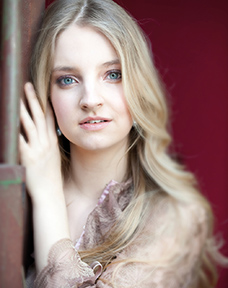

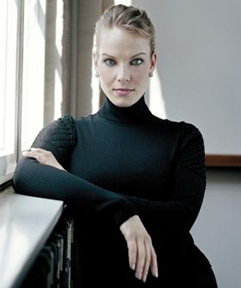
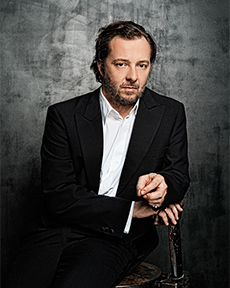
The MIDEM Classical Awards Jury announced the first Special Awards for the 2010 edition. The winners are Italian soprano Mirella Freni, Canadian pianist Angela Hewitt, Latvian mezzo-soprano Elina Garanca, German baritone Christian Gerhaher and the label Naïve.
The four artists and Naïve will be honoured as part of the MIDEM Classical Awards 2010 ceremony on January 26th, in the Palais des Festivals, Cannes.
The “Lifetime Achievement” award goes to the Italian soprano Mirella Freni. The singer became enormously successful in 1963 when she conquered the audience at the Scala in Milan as “Mimi” in Franco Zeffirelli's and Herbert von Karajan's legendary “ La Bohème.” This production became one of the most popular opera films of all times.
In Cannes, the Canadian pianist Angela Hewitt will receive the “Instrumentalist of the Year” award. Hewitt is a proven specialist of Johann Sebastian Bach's music and is just as successful with Chopin, Beethoven or Schumann. In 2005, she launched the Trasimeno Music Festival held annually in Magione.
For the category “Singer of the Year,” the MIDEM Classical Awards Jury decided to honour two artists: the mezzo-soprano Elina Garanca and the baritone Christian Gerhaher. Born into a musical family in Riga, Elina Garanca made her international breakthrough in 2003 at the Salzburger Festival when she sang “Annio” in a production of Mozart's “La Clemenza di Tito,” conducted by Nikolaus Harnoncourt. She has since established herself as one of the world’s most renowned singers.
Considered one of the most talented interpreters of our time, the German baritone Christian Gerhaher also caught the Jury’s attention. He took part in Helmut Deutsch’s “lied class” and participated in the master-classes given by Dietrich Fischer-Dieskau, Elisabeth Schwarzkopf and Inge Borkh. In 1998 he won the Prix International Pro Musicis in Paris/New York and subsequently debuted at Carnegie Hall in New York and the Schubertiade Feldkirch.
Finally, by electing Naïve as “Label of the year”, the Jury has acknowledged the energy deployed by the label in the music industry and its capacity to explore a large and rare catalogue including a range of first choice articles.
First 2010 Midem Classical Awards winners named
by James Jolly16th Dec 2009/ www.gramophone.co.uk/
The Midem Classical Awards 2010 will be held during the record industry’s annual trade fair in Cannes in late January. At a gala event, to be co-hosted by the Canadian mezzo Marie-Nicole Lemieux and Gramophone’s Editor in Chief James Jolly, on January 26, awards will be made for a host of recordings (over many categories) and to a handful of major international stars. Jacek Kaspszyck will conduct Sinfonietta Cracovia.
The Awards have been voted for by an international jury comprising magazines (including Gramophone), websites and artist management organisations. A special award is being made to coincide with “Chopin Year” (the great Polish composer and pianist was born 200 years ago, in 1810).
Among the recipients of the special artist awards are the Italian soprano Mirella Freni who is receiving a Lifetime Achievement Award and the Canadian pianist Angela Hewitt, voted Instrumentalist of the Year. Two singers are receiving the Singer of the Year, the Latvian mezzo Elina Garanca and the German baritone, Christian Gerhaher.
The Label of the Year has been chosen: it goes to the French independent, Naïve.
The record categories to be awarded are: Early Music, Baroque Music, Vocal Recitals, Choral Works, Opera, Solo Instrument, Chamber Music, Concertos, Symphonic Works, Contemporary Music, First Recording, Historical DVD (Opera & Ballet), DVD (Concerts) and DVD (Documentaries).
Voting partners at the Midem Classical Awards are: Crescendo, Fono Forum, Gramophone, IAMA. IMZ, Klassik.com, MDR-Figaro, ORF, Pizzicato, Orpheus, ResMusica.com and Scherzo.

More Background On MIDEMClassicalAwards.com
MIDEMClassicalAwards.com was the online home associated with one of the classical recording industry’s notable international awards programs of the late 2000s. The MIDEM Classical Awards were presented in Cannes, France, as part of MIDEM, the long-running international music-industry marketplace that brought together record companies, publishers, distributors, artists, managers, media organizations, technology businesses and other music professionals.
The awards occupied an unusual position in classical music. Rather than functioning primarily as a public popularity contest or a nationally focused music prize, the MIDEM Classical Awards were closely tied to the professional recording industry. Recordings were evaluated by an international jury drawn from classical-music magazines, broadcasters, websites and professional organizations. Winning could therefore provide an artist or label with both critical recognition and valuable exposure to the international music business assembled in Cannes.
The website documented this world through information about the awards, categories, judging procedures, jurors, ceremonies and winners. Material associated with the 2009 and 2010 editions is especially useful today because it captures a transitional period in recorded music, when CDs and DVDs were still central to classical labels but downloading and other forms of digital distribution were rapidly changing the industry.
From the Cannes Classical Awards to MIDEM
The MIDEM Classical Awards did not appear from nowhere. They succeeded the Cannes Classical Awards, an earlier international recording prize associated with the classical-music media.
The MIDEM Classical Awards name was introduced in 2005. This brought the awards more explicitly under the identity of MIDEM and its international music marketplace. The change made considerable sense: Cannes already attracted a large concentration of record-industry executives, producers, label representatives, journalists and performers during MIDEM.
The awards consequently became both a critical distinction and an industry event. They celebrated artistic achievement while giving winning recordings, performers and labels greater visibility among people involved in producing, distributing, promoting and selling music.
This lineage continued even after the MIDEM Classical Awards disappeared. Members of the international jury subsequently established the International Classical Music Awards, or ICMA. The ICMA describes itself as the successor to the MIDEM Classical Awards and, before them, the Cannes Classical Awards. Its first awards ceremony was held in 2011.
That succession makes MIDEMClassicalAwards.com historically interesting. It represents the middle stage of a classical-recording award tradition that evolved from the Cannes Classical Awards through the MIDEM Classical Awards and into the independent ICMA organization.
Ownership and Organization
The organization behind MIDEM was Reed MIDEM, the international exhibition and event company that operated major professional markets in Cannes. Reed MIDEM administered the MIDEM Classical Awards during this period, including reviewing entries, working with the international jury and notifying winners.
The structure was deliberately international. The jury was not limited to French critics despite the ceremony being held in France. Participating organizations represented several important classical-music markets in Europe and beyond.
Organizations involved in voting during the period included Gramophone, Crescendo, Fono Forum, Klassik.com, MDR-Figaro, ORF, Pizzicato, ResMusica, Scherzo, the International Artist Managers’ Association and the International Music and Media Centre, among others.
This international composition was fundamental to the awards’ identity. Classical recording was—and remains—a global business. A German orchestra could record for a Swedish label, a French soloist could perform with a British ensemble, and the resulting album could be distributed worldwide. An international jury reflected that reality better than an award confined to one national market.
Cannes and the Palais des Festivals
The physical setting added considerable prestige.
The awards took place in Cannes on the French Riviera, the city internationally famous for the Cannes Film Festival and numerous entertainment-industry gatherings. MIDEM itself was held at the Palais des Festivals et des Congrès, the prominent waterfront convention complex closely associated with Cannes' international cultural identity.
The MIDEM Classical Awards ceremonies were staged in the Palais des Festivals' Debussy Auditorium.
For visitors, the location placed the awards in the heart of Cannes rather than at a remote concert hall disconnected from MIDEM. The Palais sits near the Croisette, the city's famous waterfront boulevard, and is close to Cannes' hotels, restaurants, marina and railway station. This concentration made it practical for MIDEM delegates to move between trade meetings, conferences, networking events, performances and the awards ceremony.
Cannes therefore supplied more than an attractive backdrop. It helped turn the ceremony into an international industry gathering.
What the Awards Were Designed to Recognize
The MIDEM Classical Awards emphasized creativity, innovation of repertoire and artistic excellence in classical CDs and DVDs.
The categories reveal how broadly the organizers interpreted recorded classical music. CD awards covered Early Music, Baroque Music, Vocal Recitals, Choral Works, Opera, Solo Instrument, Chamber Music, Concertos, Symphonic Works, Contemporary Music, First Recording and Historical recordings.
DVDs were separately recognized in Opera/Ballet, Concerts and Documentaries.
The program also included special distinctions such as Artist of the Year, Label of the Year, Recording of the Year, Lifetime Achievement, Outstanding Young Artist, Jury Nomination and Classical Download awards. The 2010 program included special Chopin awards connected with the bicentenary of Frédéric Chopin's birth.
The categories illustrate why the awards mattered to specialist classical labels. A company did not have to compete solely with heavily marketed star releases. A historically important archival issue, a first recording of an obscure composition or an ambitious contemporary-music project could be recognized on its own terms.
How the Jury Selected Winners
The judging system was comparatively elaborate.
Eligible entries were reviewed before being submitted to an international jury. The jury generally consisted of approximately 15 to 20 members, with a smaller jury board at its core.
Creativity could be evaluated through several considerations, including innovation in repertoire, artistic excellence, packaging and technology. The inclusion of packaging and technology is particularly revealing of the era. A classical recording was still being judged partly as a physical media product, while technological changes were simultaneously reshaping how listeners acquired music.
Voting proceeded through three stages.
An initial round reduced a category to as many as ten recordings. A second round produced a shortlist of five. A final round determined three nominations and ultimately the winner. In the final stage, recordings could receive scores ranging from one to five.
This procedure distinguished the MIDEM Classical Awards from a casual critics' poll. The system was intended to produce progressively narrower selections through multiple rounds of professional evaluation.
The 2009 MIDEM Classical Awards
The fifth MIDEM Classical Awards ceremony took place on January 20, 2009, in the Debussy Auditorium. Pianist Lise de la Salle and Gramophone's James Jolly presented the evening.
The scale of the competition demonstrates the awards' reach. Contemporary coverage reported hundreds of submitted CDs and DVDs from well over 100 labels representing more than 20 countries.
Among the most prominent 2009 recipients was French countertenor Philippe Jaroussky. His recording devoted to the celebrated eighteenth-century castrato Carestini won the Baroque category, and Jaroussky was also recognized as a leading vocal artist.
German tenor Christoph Prégardien received recognition for his Schubert recording of Die schöne Müllerin, while violinist Julia Fischer was named Instrumental Soloist of the Year.
Pianist Murray Perahia won the Solo Instrument category for his Bach Partitas recording. The Pavel Haas Quartet won in Chamber Music for Janáček and Haas string quartets, and Sir Charles Mackerras' Mozart symphony recording received the Symphonic Music award.
Kaija Saariaho's music was recognized in Contemporary Music. The winning Ondine recording included works such as Notes on Light, Orion and Mirage, with performers including cellist Anssi Karttunen, soprano Karita Mattila and the Orchestre de Paris under Christoph Eschenbach.
The Choral Music award went to The Sixteen and Harry Christophers for Handel's Messiah, while the DVD categories recognized productions including John Adams' Doctor Atomic and Claudio Abbado's performance of Mahler's Third Symphony.
Sony Masterworks was named Label of the Year.
One of the ceremony's most significant moments was the Lifetime Achievement recognition given to Italian tenor Carlo Bergonzi, one of the twentieth century's celebrated interpreters of Verdi. Jonas Kaufmann participated in the presentation, linking two generations of internationally prominent opera singers.
The 2010 Awards
The sixth MIDEM Classical Awards ceremony was held on January 26, 2010, again in the Debussy Auditorium at the Palais des Festivals.
The 2010 edition provides a particularly good picture of the awards at their mature stage. Reed MIDEM reported that 16 discs and three DVDs were honored from entries submitted by labels from 20 countries.
The ceremony was hosted by Gramophone's James Jolly and Canadian contralto Marie-Nicole Lemieux and, significantly, was broadcast live on France Musique. That broadcast extended the event beyond the audience physically attending MIDEM.
Italian soprano Mirella Freni received the Lifetime Achievement Award. Freni had enjoyed an extraordinary international opera career, particularly in roles such as Mimì in La Bohème, and her appearance gave the ceremony the same intergenerational quality seen with Bergonzi the previous year.
Canadian pianist Angela Hewitt was named Instrumentalist of the Year. Latvian mezzo-soprano Elīna Garanča and German baritone Christian Gerhaher received vocal artist honors.
French independent company Naïve was named Label of the Year, demonstrating the importance of independent labels within the awards.
Other winning projects ranged widely across the classical repertoire. Quatuor Ébène's performances of quartets by Ravel, Debussy and Fauré were honored in Chamber Music. Ronald Brautigam's Beethoven project won in Concertos, while Jonathan Nott and the Bamberg Symphony were recognized for Mahler's Ninth Symphony.
A recording of Olivier Messiaen's orchestral works conducted by Sylvain Cambreling received the Contemporary Music award.
The DVD winners included a Bolshoi production of Tchaikovsky's Eugene Onegin, The King's Singers Live at the BBC Proms and a documentary about conductor Sergiu Celibidache.
The Recording of the Year award went to Bernd Alois Zimmermann's Requiem for a Young Poet, conducted by Bernhard Kontarsky and issued by Cybele.
Chopin and the Special 2010 Awards
The 2010 ceremony coincided with the 200th anniversary of Chopin's birth, giving the organizers an opportunity to connect recording history with a major cultural anniversary.
Two special Chopin prizes were presented in cooperation with the Fryderyk Chopin Institute.
A historic recording by pianist Dinu Lipatti received the "Best Ever" distinction, while Nikolai Demidenko's recording of Chopin preludes and the Third Piano Sonata received the award for a new recording.
The ceremony also featured Polish musical participation. Sinfonietta Cracovia performed under John Axelrod, with the young Canadian-Polish pianist Jan Lisiecki appearing in Chopin's Piano Concerto No. 1.
Lisiecki was still a teenager, making his appearance particularly appropriate for an awards event that simultaneously celebrated established masters and emerging performers.
Independent Labels and the Classical Recording Ecosystem
One of the most interesting aspects of the MIDEM Classical Awards was the visibility given to specialist and independent record companies.
Labels represented among winners and nominees included BIS, Ondine, Glossa, Supraphon, Signum, Onyx, Audite, Tudor, ECM, Harmonia Mundi and numerous other companies alongside major-label operations.
This mattered because classical recording had long depended on specialist labels willing to undertake projects that might never generate mass-market sales. Complete editions, neglected composers, historically informed performances, contemporary compositions and archival restorations often require considerable investment for relatively specialized audiences.
An international prize could help distinguish one recording from hundreds of new releases.
Contemporary reporting from the 2009 MIDEM also described an industry struggling with declining physical-recording sales while exploring internet distribution, downloads and new digital business models. Classical labels were therefore navigating two worlds: the traditional prestige of the carefully produced CD or DVD and an emerging environment in which music increasingly reached listeners electronically.
Classical Download and a Changing Music Business
The existence of a Classical Download award is especially significant in retrospect.
By 2009 and 2010, digital music was no longer a peripheral issue. MIDEM discussions increasingly focused on online distribution and the ways record companies could adapt to changing consumer behavior.
Classical music presented special challenges. Listeners often wanted extensive metadata: composer, composition, movement, soloist, conductor, orchestra, recording date and label. A classical work could consist of multiple tracks that made little sense when separated from the complete composition.
Recognizing digital distribution within the MIDEM Classical Awards acknowledged that classical music's future would not be limited to physical discs.
The website therefore captures a technological turning point. Its lists of CD and DVD categories belong unmistakably to the physical-media era, yet its attention to downloading points toward the streaming environment that would soon become dominant.
Audience and Popularity
MIDEMClassicalAwards.com served a specialized audience rather than a mass entertainment readership.
Its natural visitors included classical listeners, record collectors, journalists, record-label personnel, artists, managers, distributors, broadcasters and others following the international classical recording business.
The awards nevertheless generated coverage well beyond their own website. Specialist classical publications reported nominations and winners, labels publicized awards received by their recordings, and international music-industry media carried Reed MIDEM announcements.
This distributed publicity was arguably more important than raw traffic to the awards website itself. A MIDEM Classical Award could be cited on a label's website, an artist biography, CD marketing materials, press releases and later award histories. Consequently, the award name circulated through the classical music ecosystem even among people who never visited MIDEMClassicalAwards.com.
Press, Reviews and Critical Reputation
Contemporary classical-music reporting generally treated the awards as significant professional distinctions. Specialist publications reported winners in detail, while participating media organizations had a direct role in the international jury.
Labels also prominently announced their successes. Ondine, for example, publicized the 2009 Contemporary Music award for its Saariaho recording. Such announcements demonstrate the commercial and reputational value labels attached to MIDEM recognition.
The awards were particularly credible within the specialist recording community because the judging body consisted substantially of classical critics and media professionals from different countries.
As with any juried arts prize, individual listeners and critics could disagree with particular selections. No awards system can objectively determine a single "best" interpretation of Bach, Mozart, Mahler or a contemporary composer. Its importance instead came from informed international critical consensus and the exposure that followed.
Cultural and Social Significance
The MIDEM Classical Awards reflected a larger idea about classical music: preservation alone is not enough. A musical culture remains healthy when old works are reinterpreted, forgotten works rediscovered, new works commissioned and recorded, young performers introduced, historic recordings restored and new technologies used to reach audiences.
The awards' categories embodied all of these functions.
Early Music and Baroque categories encouraged exploration of centuries-old repertoire. First Recording rewarded discovery. Contemporary Music supported living or recent composers. Historical recordings preserved performances from earlier generations. DVD categories acknowledged classical music as a visual medium as well as an audio experience. Outstanding Young Artist recognition helped emerging musicians, while Lifetime Achievement connected contemporary audiences with major figures from previous generations.
Even Label of the Year carried cultural significance. Classical labels do more than manufacture recordings. Their decisions determine which composers, performers and works are documented and made available to future listeners.
What Happened After the MIDEM Classical Awards
The MIDEM Classical Awards did not continue indefinitely under that name.
The international jury moved forward independently, creating the International Classical Music Awards. ICMA was established in 2010 and presented its first awards in 2011, with the first ceremony held in Tampere, Finland.
This transition separated the awards from the annual MIDEM trade fair while preserving much of their international critical philosophy.
The lineage is explicit: the International Classical Music Awards recognize the MIDEM Classical Awards and Cannes Classical Awards as their predecessors.
This continuation is important when assessing MIDEMClassicalAwards.com today. The website represents a discontinued award brand, but the institution's underlying concept did not simply disappear. It evolved into a successor organization that continues to recognize classical recordings and musicians.
Why MIDEMClassicalAwards.com Is Historically Useful
Today, MIDEMClassicalAwards.com is most valuable as a record of a particular moment in classical recording history.
The 2009–2010 period sat almost exactly at the intersection of two eras. Traditional CDs, carefully packaged box sets and concert or opera DVDs remained important. At the same time, record companies were being forced to reconsider distribution as downloads and other internet-based channels became increasingly important.
The website also preserves evidence of the unusually international network supporting classical recordings. Performers, conductors, orchestras, independent labels, major labels, critics, broadcasters and professional organizations all intersected through the awards.
Its winners lists amount to a snapshot of what an international group of classical specialists considered especially noteworthy at the end of the first decade of the twenty-first century.
Names such as Philippe Jaroussky, Julia Fischer, Christoph Prégardien, Angela Hewitt, Elīna Garanča, Christian Gerhaher, Mirella Freni and Carlo Bergonzi give the awards recognizable star power. But the site's deeper value comes from the less obvious parts of the lists: specialist labels, contemporary composers, archival releases, chamber ensembles and recordings of repertoire unlikely to attract mainstream entertainment coverage.
MIDEMClassicalAwards.com therefore documents more than an awards ceremony. It preserves a chapter in the evolution of the international classical recording industry—one in which artistic judgment, physical media, emerging digital distribution and the commercial networking power of MIDEM briefly converged each January on the Mediterranean waterfront in Cannes.